Mill assessment challenged and changed
WILTON – The Label Art Building – known to long-time residents as the Abbott Worsted Mill – is the largest commercial building in town, and one of the oldest. Dating to the early 1800s, it was built by the Colony Brothers, and acquired by a group of businessmen in 1850, and then by Abbott Industries. It has been for sale for the past year, but now may have a buyer.
Future use of the building has not been determined, although uses from a community space to a beer pub have been discussed.
At the regular meeting of the Select Board on Monday, March 7, Selectman Kermit Williams said he was concerned about the current tax assessment affecting the sale. He said a current offer for the six parcels in The Island section of town that make up the property is $1.9 million, and that should be the assessed value, not the much higher value assigned by Assessor Todd Haywood.
“The selectmen are the final assessors,” he said, citing state statutes. “New owners could change the buildings and the use, and it would then be re-assessed. It is a unique property,” he added, and its value can’t be compared to other recently sold properties because there have been none.
He moved to change the valuation and adjust the assessing software.
Selectman Matt Fish objected, saying an independent assessor should be hired.
The motion passed.
In other business, a request from the Sewer Commissions to use $75,000 from the ARPA funds was postponed at the request of Chairman Kellie-Sue Boissonnault until after the town elections “because it might be a different board.”
The money would be used to help offset Wilton’s portion of the upgrades required at the Milford Wastewater Treatment plant which will cost “millions,” according to the trustees. Wilton has a long-standing agreement with Milford under which Wilton pays a percentage of operating costs.
Fish objected saying the money should not “be used to subsidize a sewer system” that isn’t used by the whole town.
Chris Carter, Commission chairman, said, “The majority of ARPA funds are to be used for water and sewer.”
Sandy Lafleur, coordinator of the Still Good Shed project at the recycling center, said they have prepared a brochure and a training program for the volunteers who will staff it.
Still under discussion is what will be accepted, what to do with any items not swapped, and costs of materials that have to be disposed of.
The Shed will not accept large pieces of furniture, electronics, boxes of unsorted items, or items considered unusable.
The next meeting will be Monday, March 21, 6 p.m., in the Town Hall Courtroom.
Cabinet News

Local students achieve academic honors at Mt. Wachusett

Save The Trades event to showcase renovation plans

Local students achieve academic honors at Assumption
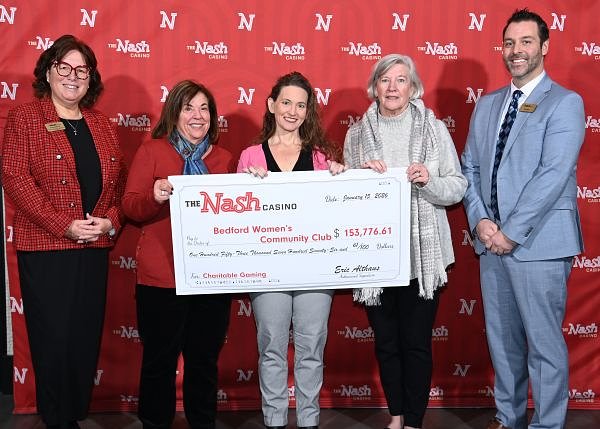
Nash Casino presents $2m to local nonprofits

Local students achieve academic honors at Fitchburg State