Lyndeborough Glass Company has rich history
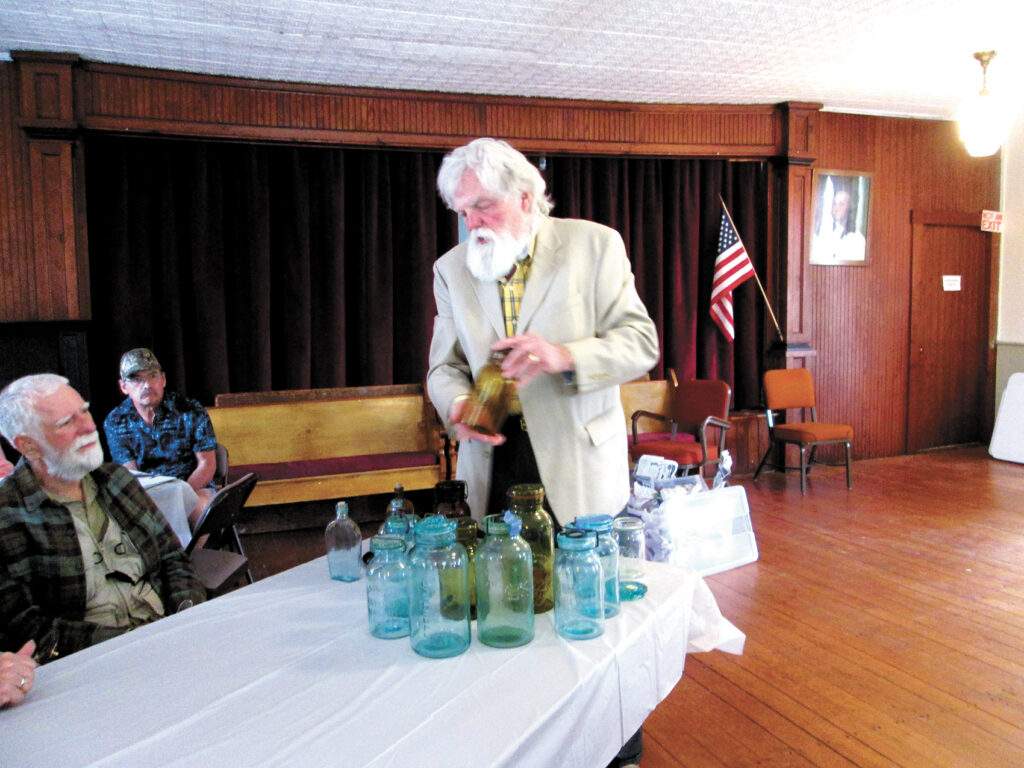
At the annual meeting of the Lyndeborough Historical Society on June 18, member Stephanie Abbot presented a program on the history of glass making in New Hampshire, especially the Lyndeborough Glass Company, which operated between 1866 and 1886.
LYNDEBOROUGH – The first glass factory in New Hampshire opened in Temple about 1790. It lasted only a couple of years. Following the War of 1812, until about 1842, several glass works opened in Keene, mostly making window glass. Those were followed by five different factories in Stoddard. Most of that glass was dark green or brown.
The Lyndeborough Glass Company began operations in 1866, totally different from the others, because they could produce almost clear glass, mostly a pale aqua. The difference was the availability of an abundance of pure quartz.
On Saturday, June 18, Lyndeborough Historical Society Member Stephanie Roper presented an overview of the history of glass making in the state with a detailed description of the Lyndeborough operation. She provided a selection of pictures and a samples of glass mostly from a recent generous donation to the Society by Norman Reid of Meredith who started his collection while living in Hollis.
Roper was joined by local collector Walter Holland with several samples of early canning jars.
Lyndeborough Glass was the largest in the state in terms of number of employees, 70 to 85 the production, plus many ancillary workers such as brick makers, blacksmiths, and women who wove the cane baskets around the larger bottles. The workmen were also better paid, $5 per day, and $15 per day for a master craftsman.
The factory occupied 11 buildings on 12 acres off Glass Factory Road. There are no signs of the factory now and only two of its buildings remain – the Superintendent’s house and a shed now owned by Joan Hyde.
At its height, the factory produced from 6,000 to 7,000 bottles a day. Bottles ranged from tiny medicine vials to huge carboys. Many of them have the user’s name molded into them: Moxie, Lydia Pinkham Blood Medicine, among other patent medicines and sarsaparilla.
But the factory was not popular with everyone, Roper said. Local people were concerned about “all those aliens.” They came mostly from Massachusetts and beyond, and many of them were Catholic.
Their presence prompted “Deacon” David Putnam to form a temperance society to combat suspected liquor use and wild living. The establishment of mills or factories and the influx of outsiders caused the breakup of two area towns. Greenville separated from Mason and Bennington from Hancock.
Since the company did not provide housing, workers rented rooms wherever they could.
“The company was always in financial difficulty,” she said. “The national recession of 1873 affected everyone, including closing the Stoddard glass works. The arrival of the railroad from Wilton in 1873 helped somewhat, but costs kept going up.
While Jacob Putnam was the manager in charge, he provided some stability, she said. The company produced insulators for telephone and telegraph wires – electricity had not yet arrived in Lyndeborough. “They had an exclusive contract with American Insulator Company.”
The company went bankrupt in 1886, but was reorganized as Crystal Glass Company which focused on making canning jars, both Lightning and Puritan, for two years. Jacob Putnam died in 1888 ending the operation.
“The professional glass blowers all left,” Roper said, “the buildings were torn down.”
Lyndeborough glass is now very collectible. Even the chunks of slag, globs of glass from the furnaces that were discarded, are collected for paper weights and in some places made into jewelry.
Stories from the glass factory will be included in the new town history being prepared by the Historical Society and due out this summer.
Cabinet News

United Way announces annual coat drive

Final Hazardous Waste Collection dates for 2026 are Sept. 26 and Nov. 7

Bedford senator named Legislator of the Year

Alleged Sky Meadow shooter to claim insanity
Find Your Farm Wellness