Rich Masters: Bears are here; we can coexist
WILTON – The bears are here, and they’re going to stay, but we can co-exist with them with a minimum of conflict.
The problem with bears, Rich Masters said, is they are omnivorous – they’ll eat almost anything- and they are opportunistic – they’ll grab that food any place they can. And bears are smart. Ask anyone who has dealt with them.
Masters, a wildlife steward and educator with the N.H. Fish and Game Department, talked about bears on Wednesday, Aug, 3, at the Wilton Collaborative Space. There was a full house of appreciate listeners. Most of them had bear stories.
There were few bears – or many other wild animals – in New Hampshire by the end of colonial times. The state was almost deforested. But the human population declined after the Civil War and the forest came back, along with the wildlife. The Restoration Act of 1937 created hunting seasons and game quotas and promoted conservation. There are now bears in all ten counties, Masters said.
Masters began with an overview of wildlife in general: the value of beavers to the ecology, the re-introduction of wild turkeys, the expansion of the deer herds. There are mountain lions, he said, “but they appear to be transients, not yet established.”
Bears are constantly hunting for food, he said, but they also conserve energy in that hunt. They need to build up a reserve of protein for their hibernation and nurturing of cubs, so they’ll always take the easy way.
Bears are not true hibernators like chipmunks. They are frequently out and about during warm spells in the winter. The cubs, from one to three, are born in early spring. “They are born without hair,” he said, “weigh about half a pound and have blue eyes.”
Cubs stay with their mother for a year and half, then she mates again.
Bears natural food is vegetation when they emerge in the spring, usually in the wetlands, such as skunk cabbage. In the summer they eat fruits and berries plus grubs and insect larva. Their main source of protein is in the fall: mast, acorns and beech nuts are favorites.
But human food is appealing and easy to get to. That includes dumpsters and birdfeeders.
“Backyards are prime foraging areas,” Masters said. “They can be an endless supply of protein.”
Sunflower seeds are very high on the list. So is food waste.
“Don’t feed the bears. Bears become conditioned to people, and that’s not good for the bears’ health.” He added, “People need to remove the attractions.”
To do that, cover the garbage cans, close the dumpsters, bring in the birdfeeders. There are (nearly) bear-proof containers. Install electric fences around the chickens and the beehives.”
Dogs and noisemakers are sometimes effective, at least in the short term.
If bears become too accustomed to people, they can become a nuisance. In extreme cases, the bear becomes too aggressive, invades houses or campers, and state has to eliminate the bear. Relocating the bear frequently doesn’t work, they just come back.
Black bears are not usually aggressive toward humans. The last recorded death by a bear was in 1787. But if you encounter a bear, stand firm, make eye contact, talk to it, and gradually back away. The bear will usually leave faster than you do.
Bears are magnificent animals, Masters said. “We can learn to live together. The solution is us.”
The Collaborative Space is a project of the Wilton Public/Gregg Free Library, funded in part by the N.H. State Library and the Institute of Museum and Library Services. The Space offers a wide variety of free programs. The next wildlife program will be on coyotes. For information, contact the library at 603-654-2581, or email wiltonlibrarynh@gmail.com.
Cabinet News
State Police make hundreds of traffic stops and more than a dozen arrests on St. Patrick’s Day
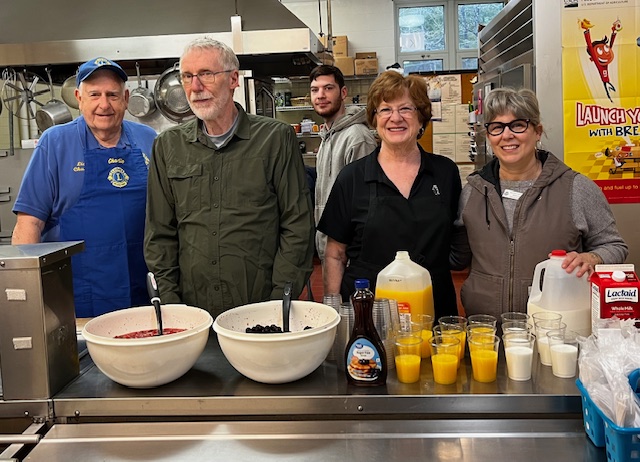
All are welcome at Amherst Lions Club 52nd Annual Pancake Breakfast

Identity theft discussion slated for April 7
Local student achieves academic honors at Syracuse

Local students achieve academic honors at Lasell