
Triple A: prepare yourself and your vehicle for the cold
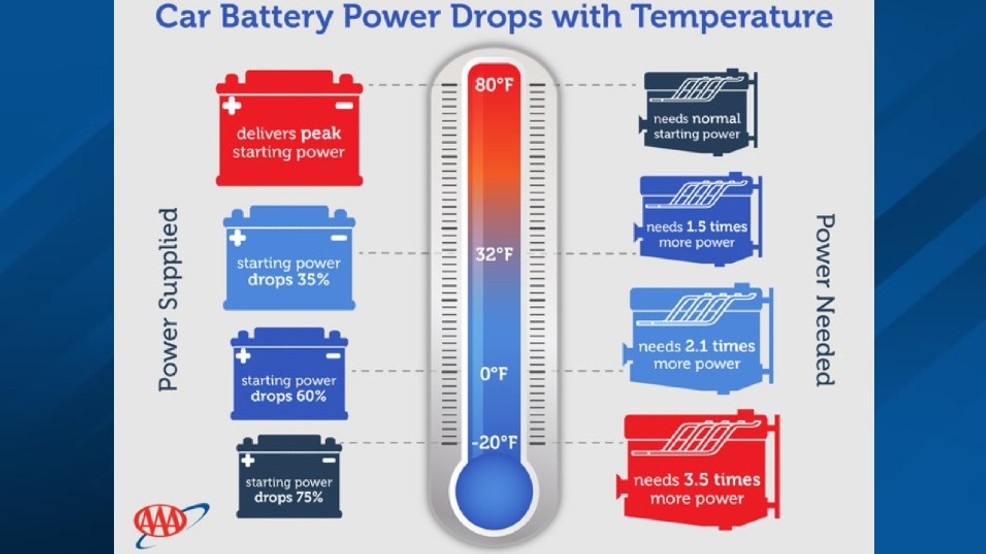
With temperatures dropping into the single digits and below, Triple A reminds motorists to be prepared.
“Batteries do not perform as well in extreme cold temperatures,” said Daniel Goodman, spokesperson for Triple A Northern New England. “When cold weather hits, a weak battery may not have sufficient strength to start the vehicle.”
Preparing yourself and your vehicle for colder temperatures can help prevent becoming stranded in winter weather. Triple A recommends the following precautions:
Batteries
-At zero degrees, a car’s battery loses about 60 percent of its strength. Even at 32 degrees, it is 35 percent weaker than normal. Have a qualified automotive technician perform a load test on your battery to make sure it’s strong enough for winter.
-Car batteries have an average life span of three to five years. Have your battery and charging system tested.
-Clean corrosion from battery posts and cable connections with battery terminal cleaner.
Fuel
-Keep your gas tank at least half full in freezing conditions. This reduces condensation in the fuel system and ensures you have adequate reserves to run the engine for heat in an emergency.
Tire Pressure
-Check tire pressure on all four tires and the spare more frequently during colder temperatures. Don’t be surprised if your dashboard warns you that your tire pressure needs to be addressed. As the average temperature drops, so will tire pressures – typically by one pound per square inch for every 10 degrees. The proper tire pressure levels can be found in the owner’s manual or on a sticker typically located on the driver’s side door jamb.
Winter Safety Kit
-Have a winter emergency kit prepared in your vehicle that includes a first aid kit, jumper cables, a flashlight, shovel, blanket, kitty litter and an ice scrapper.
Warming Up
-With newer vehicles “warming up the car” might not be a necessary requirement from a mechanical standpoint but from a driver comfort and safety standpoint. Warming up your car allows the motorist to shed restricting clothing. Boots, gloves, hats and heavy jackets may restrict movement, making driving more challenging. Warming up the car also helps clear ice and condensation from the windows.
Cabinet News

Local student achieves academic honors at Syracuse

Local students achieve academic honors at Lasell

House fire claims life of Wilton woman

Hassan tours renovated Early Ed Center at Merrimack YMCA

Cher’s son arrested in NH twice in two days
Mother of Sen. Hassan dies at 94
It is with sadness and much love and appreciation that U.S. Sen. Maggie Hassan and her siblings, Franny and Frank ...