Nashua teen develops affordable way to detect Alzheimer’s
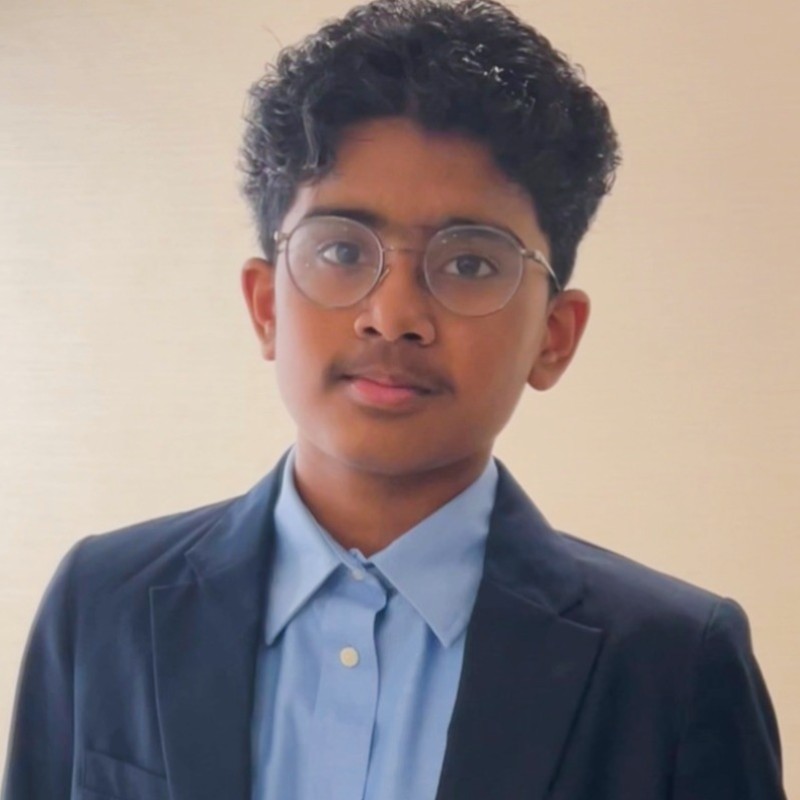
Yuvanguru Balagurumoorthy, a 15-year-old sophomore at Nashua High School South, has created ACCESS-AD, a screening device designed to provide early detection of Alzheimer’s disease without breaking the bank. Courtesy photo
NASHUA – At just 15 years old, Yuvanguru Balagurumoorthy, a sophomore at Nashua High School South, has created ACCESS-AD, a screening device designed to provide early detection of Alzheimer’s disease without breaking the bank.
“I kept thinking about the families who know, deep down, that something is changing in someone they love, but cannot get answers quickly or easily. Alzheimer’s often begins with small, quiet signs and for many families those signs are followed by fear, uncertainty and a long wait for help,” said Balagurumoorthy. “What stayed with me was how unfair that is, especially for lower-resource families, where early evaluation can be expensive, delayed or simply out of reach. So much research is focused on pushing the most advanced methods forward, which matters, but I wanted to focus on something equally important, building research that people can actually reach, afford and use.”
After spending a considerable amount of time refining the device, Balagurumoorthy said ACCESS-AD now functions with 94 percent accuracy and at a cost of less than $300.
“The device is meant to be simple and accessible. It would not require people to assemble it themselves,” he said. “My goal is to create something that can be used as a ready-to-use screening system, rather than expecting families or older adults to build or configure anything on their own.”
In contrast, traditional Alzheimer’s screening can cost up to $3,000 depending on health insurance coverage.
“When you think about a grandmother, a grandfather or someone you love slowly slipping away, this becomes more than a research project,” he said, adding that he is looking to partner with clinics and community organizations. “I want ACCESS-AD to reach as many people as possible, especially families who are too often left behind. If we can make screening more accessible, we can give people something incredibly valuable — more time to understand, more time to plan and more time with the people they love.”
In addition to developing ACCESS-AD, Balagurumoorthy was a finalist in the Regeneron International Science and Engineering Fair. He took first place in the New Hampshire Science and Engineering Exposition last March and won the 3M Young Scientist Challenge in 2023. Balagurumoorthy is also a member of the Nashua Robotics Team Tesseract and competed at the FIRST Championship in Houston in 2025.
Looking ahead, Balagurumoorthy said he is interested in a career at the three-way nexus of technology, research and healthcare.
“I’m very interested in building startups and creating technologies that can make a meaningful impact at scale,” he said. “For me, success means creating something that is not only innovative, but truly useful in people’s lives.”
Cabinet News
PSU to host State History Contest on April 10
Remembering the final signer of the Declaration of Independence
Nashua Regional Planning Commission announces two household hazardous waste collection events
Melendy Pond resident advocates for open school enrollment
New Hampshire Lottery unveils spectacular new $30 scratch ticket