Similarities cited between Melendy Pond and Hampton Beach
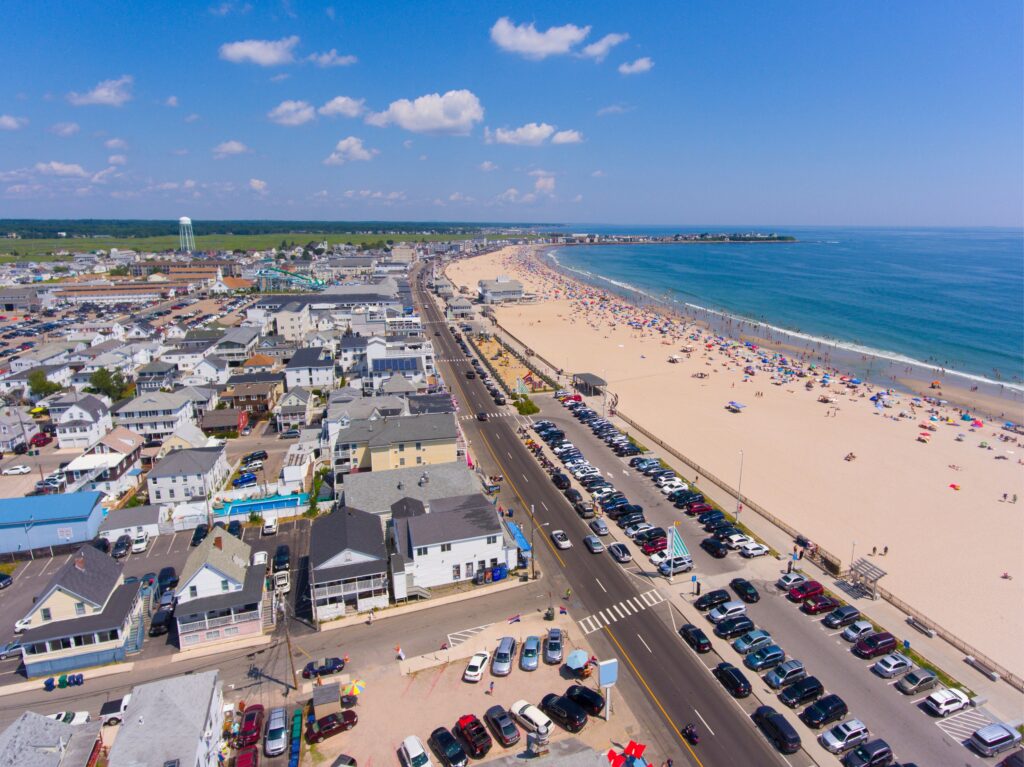
Properties on Hampton Beach were the focus of a situation in the 1970s that was similar to the current residency dispute at Melendy Pond in Brookline. Courtesy photo
BROOKLINE – For years, Melendy Pond residents have been trapped under the town’s iron fist.
The Residence Provision in the current lease agreement states that those living on the pond will “not claim to be residents and will forfeit all the rights and benefits incidental to residency.” These rights include voting, holding town office, enrolling their children in public school and even having a library card.
Melendy Pond residents are also at risk of having their homes demolished by the town by 2032.
However, this is not a first for the Granite State.
In his recent update of the Melendy Pond History Document, resident Peter Rondeau of Second Street described a similar situation at Hampton Beach during the 1970s.
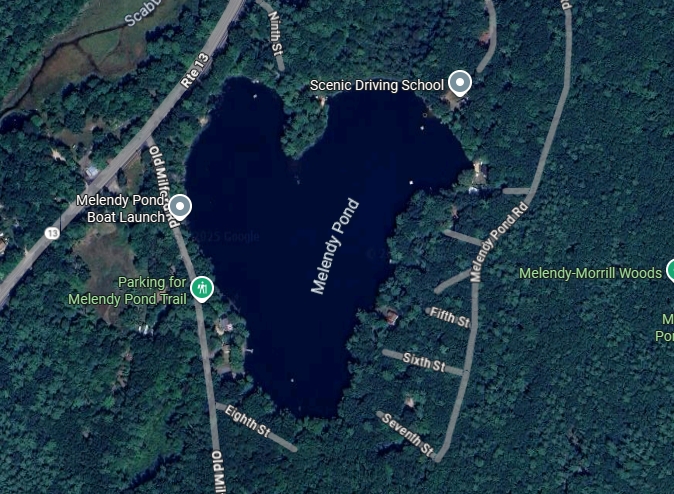
The land around Melendy Pond in Brookline continues to be a point of contention between the town and those who have homes on the pond. Courtesy photo/Google Maps
At the time, the beach was owned by the town, according to Chapter 8 of “Hampton: A Century of Town and Beach, 1888-1988” by Peter Randall. Therefore, everyone with beachfront homes paid rent to the town in addition to property taxes. However, like the current situation at Melendy Pond, Hampton Beach residents began to complain that they were not receiving the same level of service as the rest of the town.
In 1982, a Leased Land Study Committee suggested that the town give lessees the option of purchasing the lots at 30 percent of fair market value. The measure was officially passed during a Special Town Meeting by a vote of 223 to 187.
“The vote explicitly acknowledged the lessees’ longstanding investment and reliance on the original lease terms,” Rondeau said in his update. “The town financed the purchases directly, requiring no down payment.”
There was also a public arbitration process in place to settle any disputes over property values.
Six years later, 555 of the 650 beach lots had been sold to their respective leaseholders.
For the 30 properties that remain under lease agreements, the Hampton Assessor’s Office provides potential buyers with a Leased Land Disclosure. According to Rondeau, the document states that “land may be purchased separately from the town and that leaseholders are not compelled to vacate.”
Hampton’s current lease agreement does not include any restrictions regarding residency, voting or enrollment in the Hampton School District.
“It does not require lessees to demolish their own structures at lease expiration,” said Rondeau. “Brookline’s 2019 lease does the opposite, it prohibits domicile, requires an annual affidavit, restricts voting and school enrollment, sets rent at the Town’s discretion, restricts financing and requires the leaseholder to remove structures at their own expense upon expiration.”
Rondeau said that unlike Hampton, Brookline officials have not allowed Melendy Pond residents to have input prior to the town making any decisions.
“Hampton is the New Hampshire precedent for how a municipality resolves this situation equitably,” he said. “Brookline has moved in the opposite direction.”
- Properties on Hampton Beach were the focus of a situation in the 1970s that was similar to the current residency dispute at Melendy Pond in Brookline. Courtesy photo
- The land around Melendy Pond in Brookline continues to be a point of contention between the town and those who have homes on the pond. Courtesy photo/Google Maps
Cabinet News

Yoga with Amelia Earhart

Southern NH Food Truck Festival savored by crowds

Singing with the Sails
Concrete barriers being removed from Bedford Toll Plaza

U.S. Marshals conduct Operation Adam’s Watch