Master gardeners share secrets to harvesting
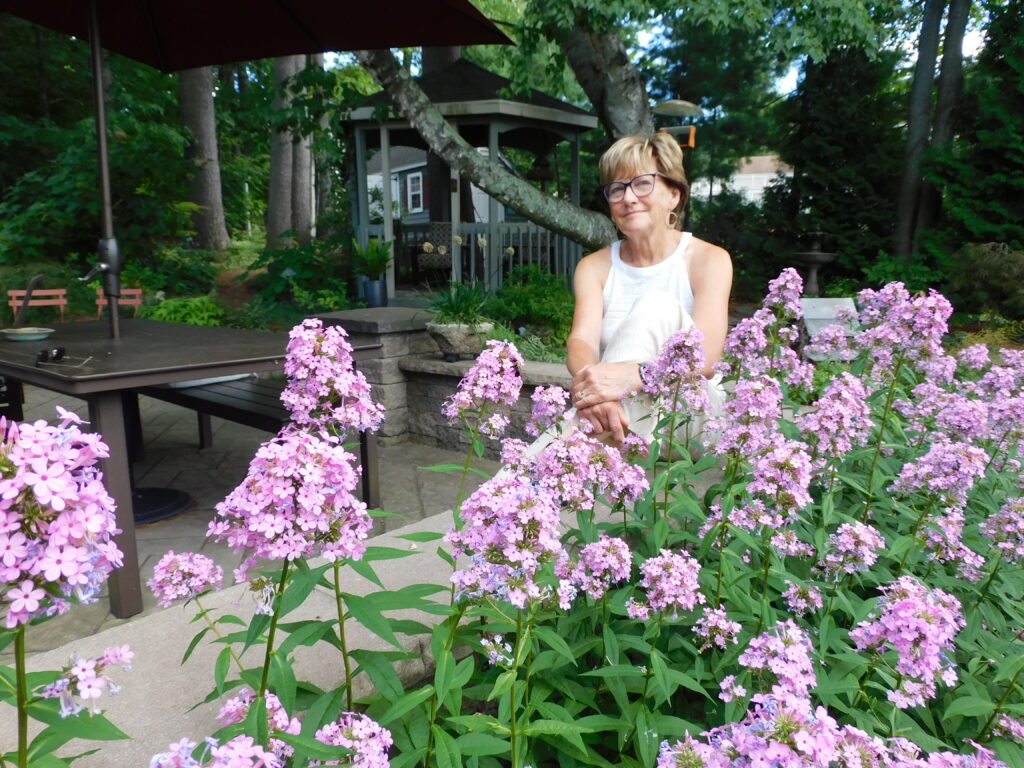
Barb Young, owner of The Big Little Garden, located in Nashua, displays some of the self-sustaining perennials gracing her garden. Info: thebiglittlegarden.com. Photo by LORETTA JACKSON
Homegrown tomatoes, too many zucchini and basil leaves flavoring pesto sauces surely are miraculous tributes to any gardener whose plot of earth would be proclaimed by experts as Grade A.
Local green thumbers featured here are gardening gurus. Master Gardener credentials for some were gleaned through university extension programs or education elsewhere.
Consulted here for some sage advice are four ladies sharing their thyme to describe some autumn recommendations for the cumin spring. They earn a celery of $0 but often are peppered with questions. Lettuce hear their suggestions.
Barb Young, of Nashua, and Kathie Breen, of Merrimack, along with Holly Park, of Hollis, and Yi-Ling Shen, of Nashua, all are longtime avocados of using no chemical fertilizers. More counsel follows.
— Barb Young, certified master gardener and owner of The Big Little Garden, located in Nashua, is a veteran plant whisperer who admits to being addicted to plants. Her self-sustaining perennials thrive largely from preserving the underground environment of insects, worms, roots and tubers.
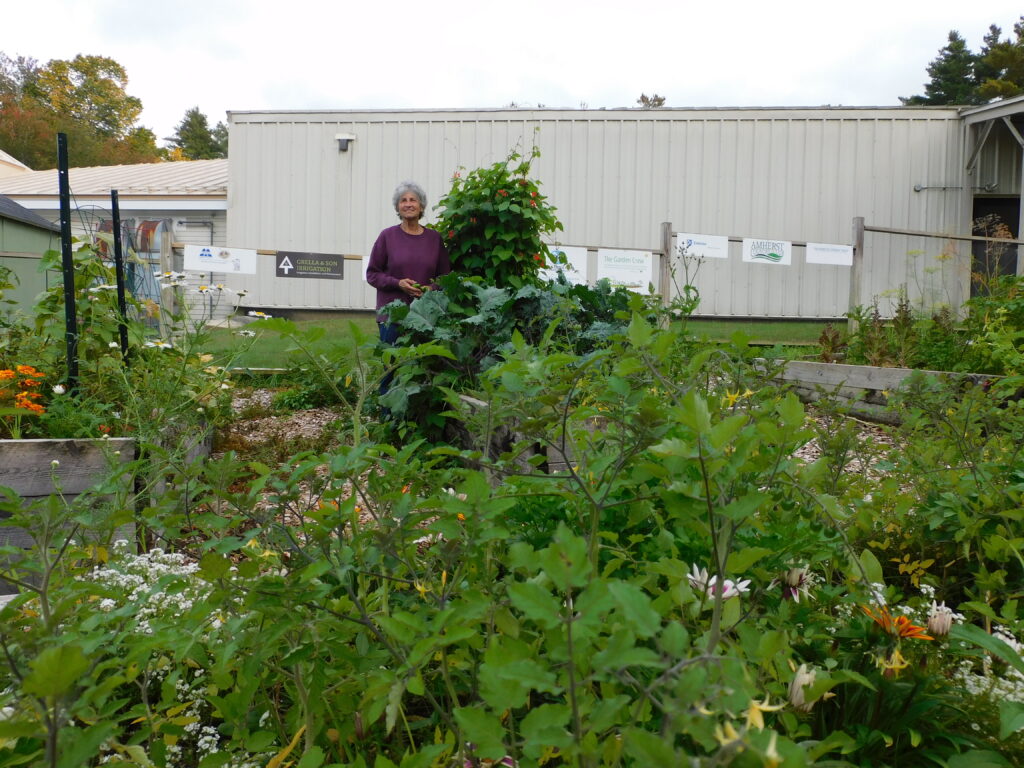
Kathie Breen, of Merrimack, volunteers with others at the Souhegan Valley Boys & Girls Club in Milford to help educate youngsters there about the rewarding enterprise that is gardening. Info: svbgc.org. Photo by LORETTA JACKSON
“For me, fall is when I most appreciate my summer garden. Don’t be concerned about ‘decay’ as the season changes, for dead plant material will shield the new growth of spring,” Young said.
“I continue to water any recently planted trees and shrubs to help sustain them when the soil freezes during winter months,” she added.
— Kathie Breen, a Merrimack master gardener, educates youth at the Souhegan Valley Boys & Girls Club in Milford, along with other volunteers. They share with the club’s participants all aspects of gardening — planting, weeding, harvesting, cooking and eating the natural bounty.
“We maintain several veggie gardens and the native flower gardens here, along with the plants along a nature trail adjacent to the Souhegan River. In autumn, it’s helpful to remove dead veggie plants and compost them to enrich next year’s soil,” said Breen.
“Always leave seed heads standing uncut to provide winter food for birds and use leaves and evergreen needles to provide ground protection for insects, bees and wildlife.” she added.
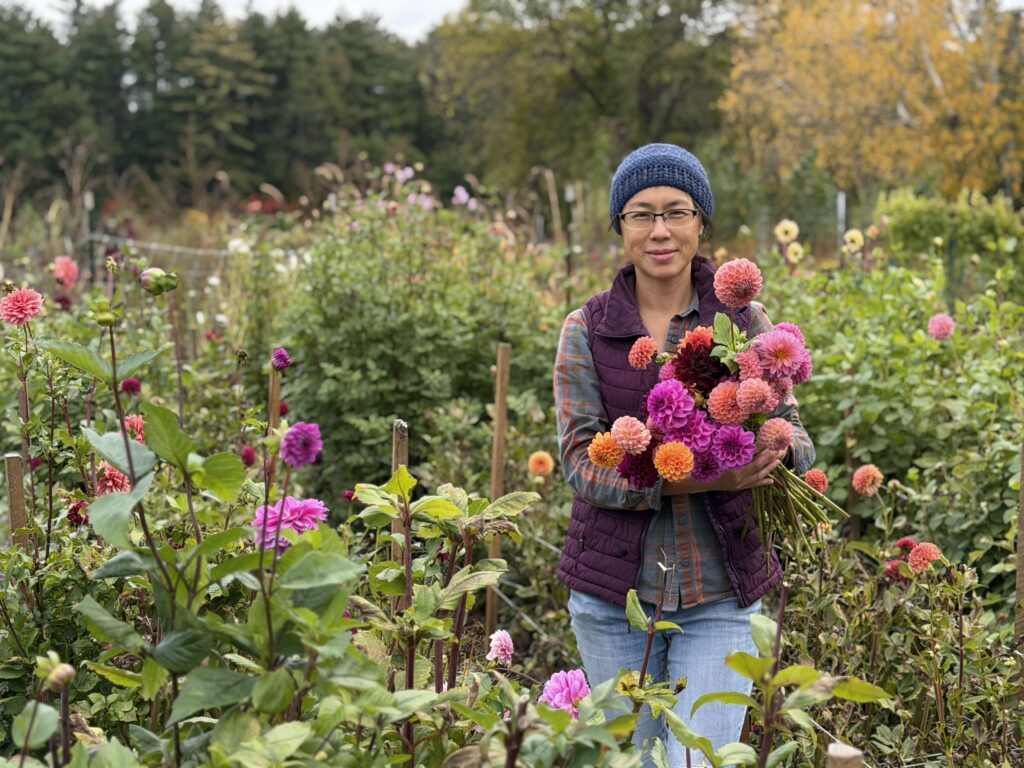
Yi-Ling Shen, of Nashua, an elite floral designer and owner of Bluestone Botanique, shares a look at the season's final harvest in her Nashua garden. Info: bluestonebotanique.com. Courtesy photo
— Holly Park, a Hollis garden designer and owner of Scout Hill Farm, favors perennials grown from bulbs and tubers that depend on some good gardening habits.
“You can plant daffodils, hyacinths, winter aconites (buttercups) and muscari (grape hyacinths) right up until the ground freezes to get early spring color and make food for pollinators,” said Park.
“I cut back peonies to prevent disease but leave everything else standing until spring,” she added.
— Yi-Ling Shen, a Nashua floral designer and owner of Bluestone Botanique, grows hundreds of dahlias for her floral wedding designs.
“Fall is when dahlias really shine, bringing rich colors to both the garden and floral arrangements. With regular cutting and deadheading, they keep blooming right up to the first frost, long after many summer flowers have faded,” Shen said.
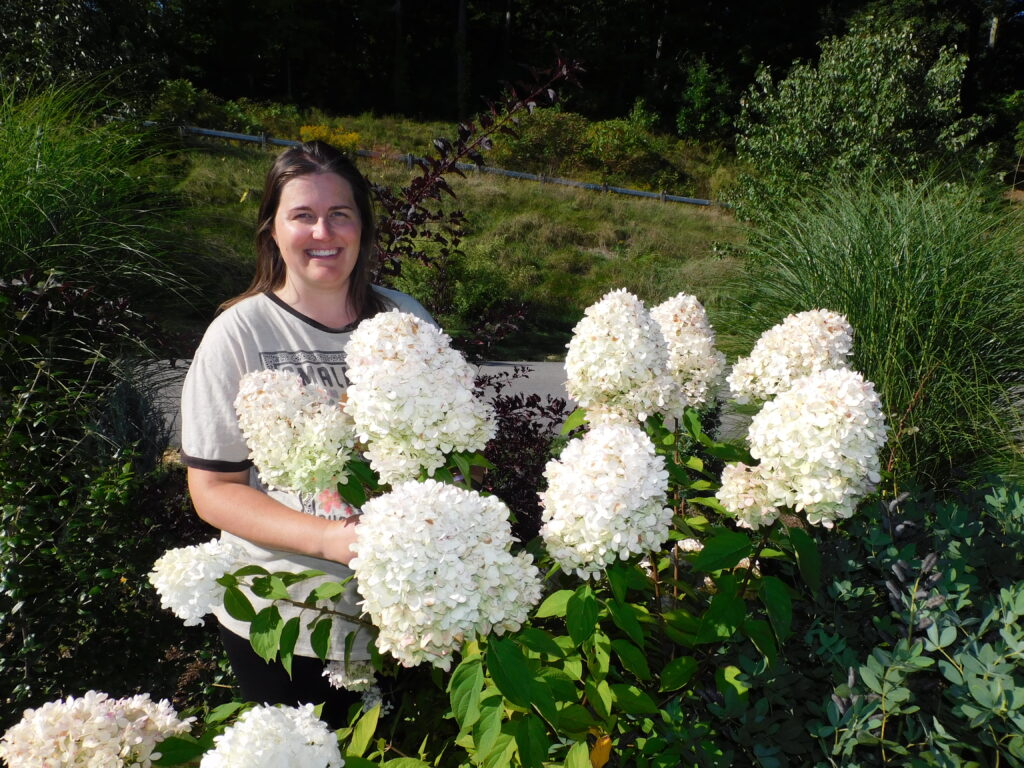
Holly Park, owner of Scout Hill Farm in Hollis, favors perennials in a natural landscape that features hydrangeas, dahlias, and other flora. Info: scouthillfarm.com. Photo by LORETTA JACKSON
“In New England, we dig up, divide, and store the tubers over winter. It’s a little extra work, but there’s something deeply satisfying about saving a piece of this year’s garden, knowing its beauty will multiply next year,” she added.
A wealth of information on gardening is available from many sources, including University of New Hampshire Extension Yard and Garden Infoline, 1-877-GROW (1-877-398-4769).
- Barb Young, owner of The Big Little Garden, located in Nashua, displays some of the self-sustaining perennials gracing her garden. Info: thebiglittlegarden.com. Photo by LORETTA JACKSON
- Kathie Breen, of Merrimack, volunteers with others at the Souhegan Valley Boys & Girls Club in Milford to help educate youngsters there about the rewarding enterprise that is gardening. Info: svbgc.org. Photo by LORETTA JACKSON
- Yi-Ling Shen, of Nashua, an elite floral designer and owner of Bluestone Botanique, shares a look at the season’s final harvest in her Nashua garden. Info: bluestonebotanique.com. Courtesy photo
- Holly Park, owner of Scout Hill Farm in Hollis, favors perennials in a natural landscape that features hydrangeas, dahlias, and other flora. Info: scouthillfarm.com. Photo by LORETTA JACKSON
Cabinet News

Warmington frantically trying to catch Ayotte in governor’s race

St. Patrick Church Fair slated for Nov. 21
GOP candidates spar with Dems at Manchester forum
MANCHESTER - Republicans and Democrats continue to trade barbs as the hotly-contested midterm election season winds ...

FDA offers Halloween safety tips

Pappas promises to stand against Trump